Riopelle Conservation
Jean-Paul Riopelle is one of Canada’s most famous artists, a pillar of the Abstract Expressionists of the mid 20th century. His paintings are instantly recognizable, with his bold colours and heavy paint application to his canvases using a wide palette knife. The paint application was so thick and heavy, that sometimes it took decades for his paintings to dry. This drying process, also known as polymerization, sometimes resulted in cracks in the paint layers, as the material contracted. Combine that with decades of unstable environmental conditions (temperature and relative humidity fluctuations) causing micro expansions and contractions of the canvas support, and sometimes you will get delaminations: paint peeling away from the canvas support below. If left untreated, this condition can eventually progress to paint loss.
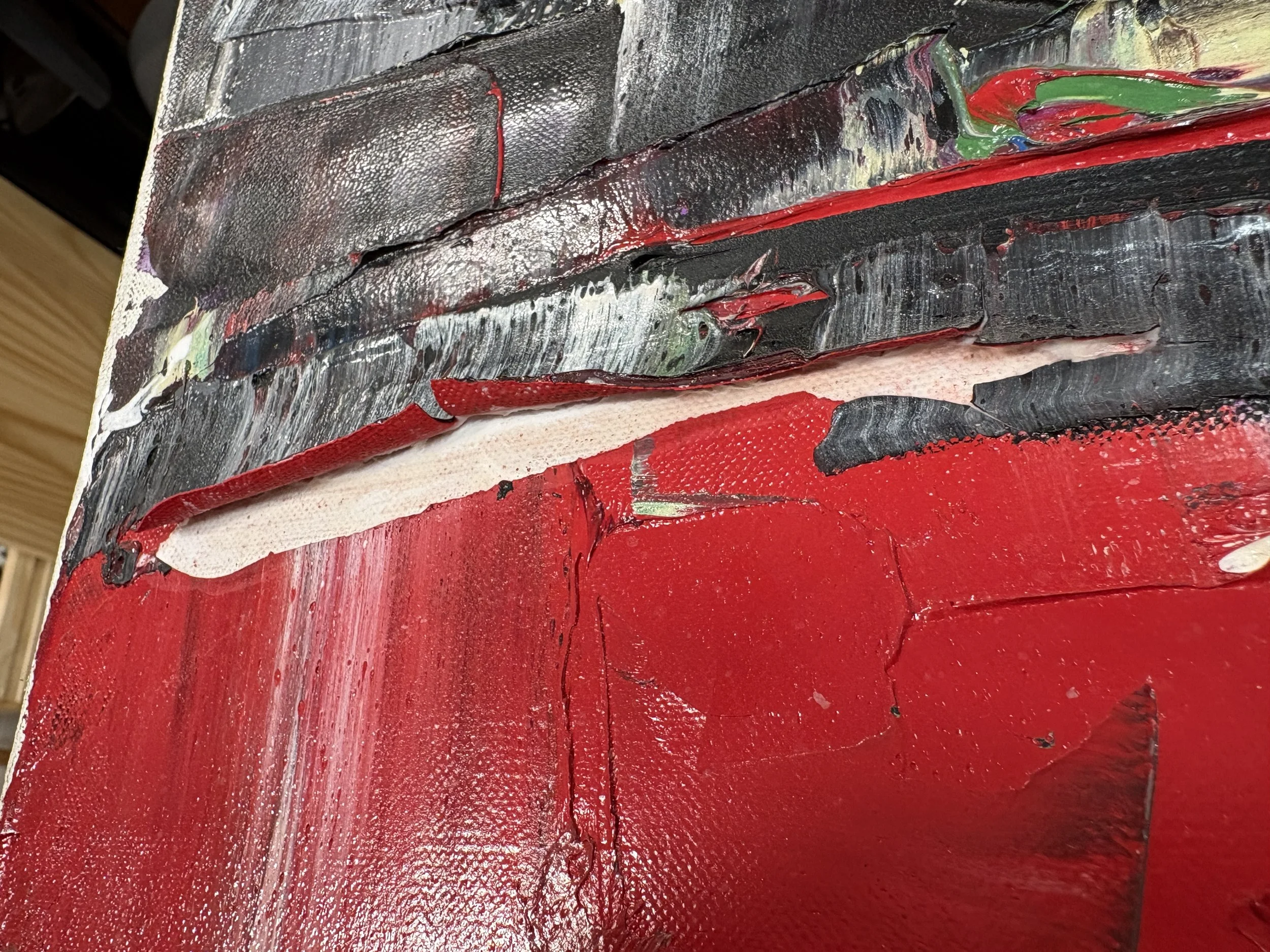
If you own a painting by Riopelle, or other artists that used heavy paint application techniques like Paul-Emile Borduas, it is important to have it examined by a conservator every 10 years or so to map its condition state and verify its stability. If there are indications of early-stage delaminations, it is best to have these treated earlier rather than later to keep the painting in a stable, healthy condition state.
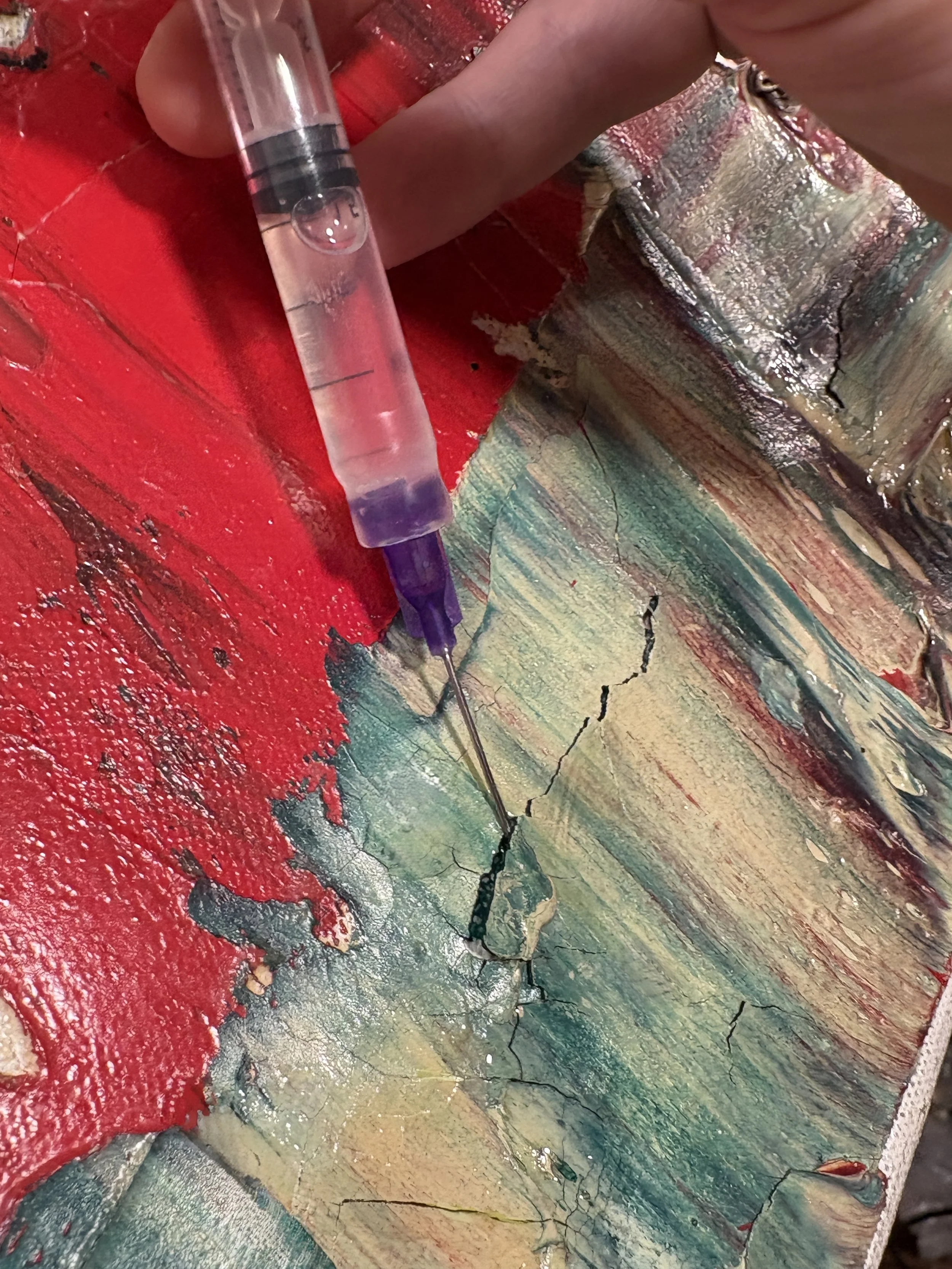
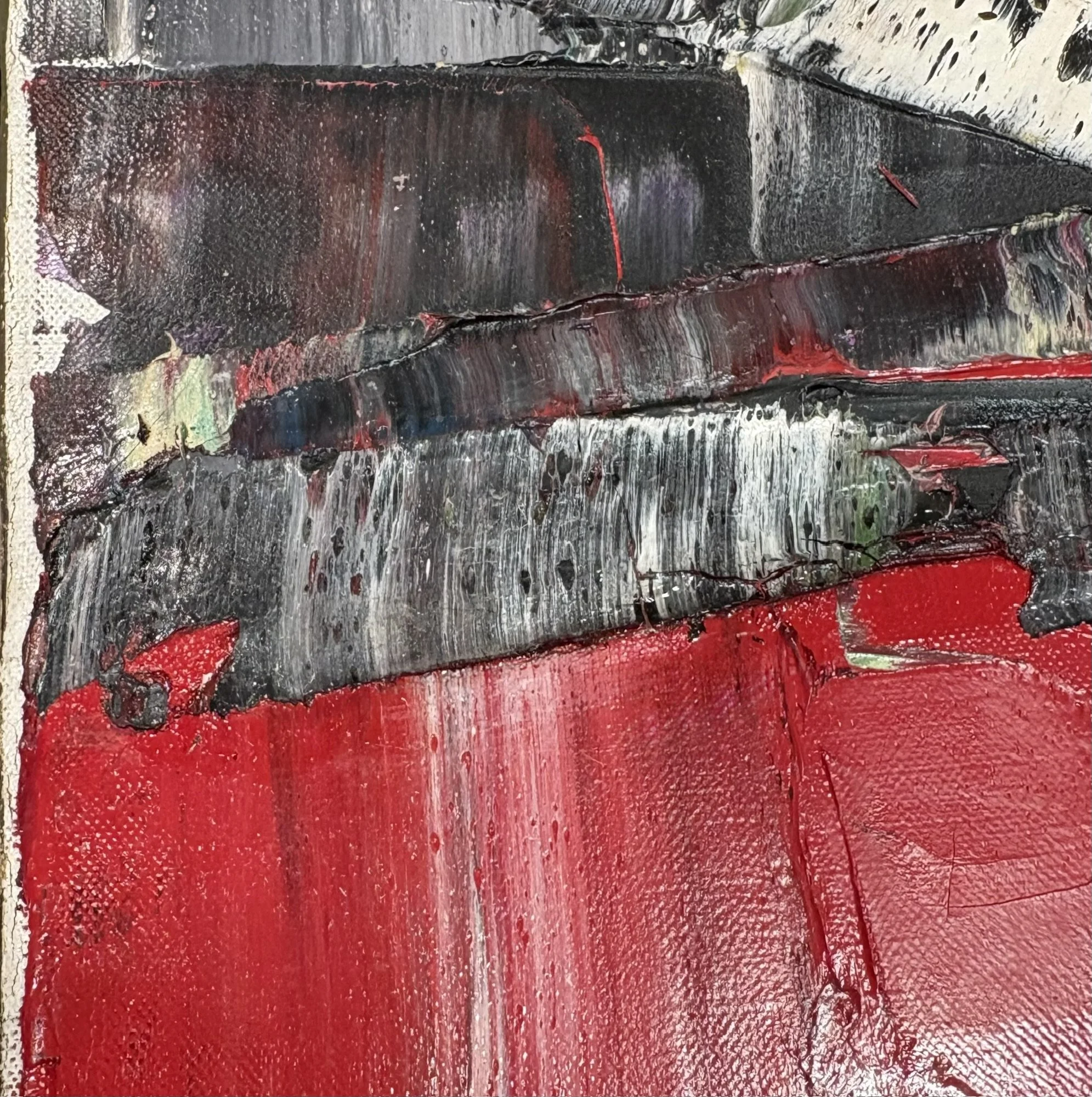
At The Art Conservatory, conservation grade thermoplastic adhesive is injected under each delamination, and then the paint is reattached to the canvas using a heat reactivation technique, bringing all delaminations back down into plane. Treatment is minimally invasive, and preserves Riopelle’s original surface quality, without imparting unwanted sheens. The following photo is an “after treatment” image, showing the same area of a Riopelle painting as shown in the first photograph in this article. The curled paint delamination has been stabilized and Riopelle’s original paint layer preserved.